
China's Snooker Boom: How 150 Million Viewers Are Moving Betting Odds
 Available in US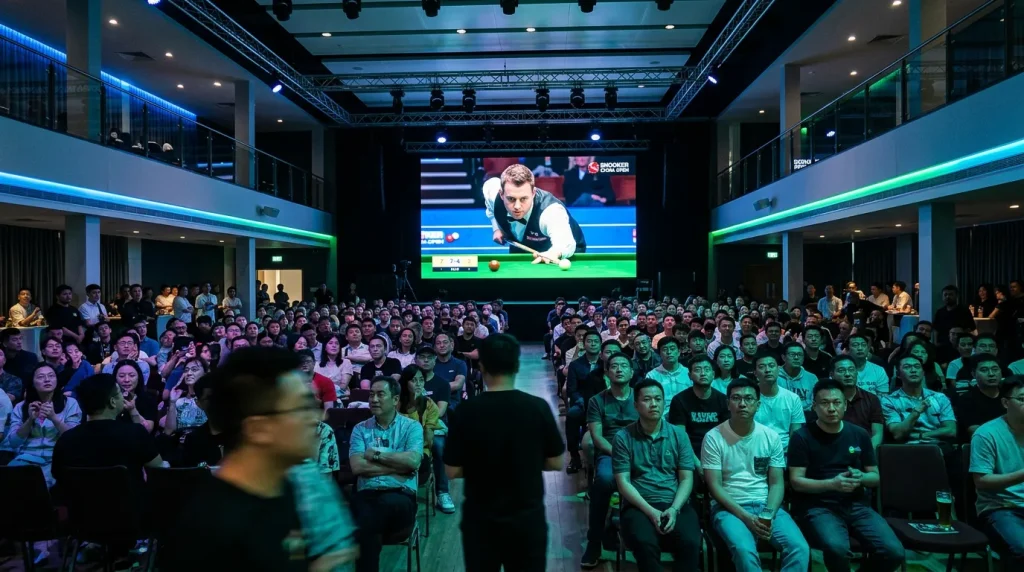
The 150-Million Audience That Changed Snooker Economics
When 150 million Chinese viewers tuned in to the 2025 World Championship final, they didn’t just watch a snooker match – they shifted the economic centre of gravity for the entire sport. That single broadcast audience exceeded the combined viewership of every European market for the tournament. As a betting analyst, the moment I saw that figure, I started remodelling how I think about snooker odds formation, because an audience of that scale doesn’t just watch passively. It generates commercial investment, sponsorship money, and – critically – betting volume that influences how bookmakers set prices globally.
To put 150 million in perspective: BBC’s total TV reach for the 2025 World Championship was 12.6 million viewers across the entire tournament, with a peak of 3 million for the final. China’s single-session audience for the same final was fifty times the BBC peak. WST Chairman Steve Dawson noted that the record iPlayer streaming numbers demonstrated a growing audience of new fans attracted to snooker’s capacity for drama. That growth is real, but the Chinese audience growth is on an entirely different scale.
Chinese Players on Tour and Their Effect on Markets
China’s influence on snooker isn’t just spectators – it’s players. The Chinese contingent on the professional tour has grown steadily over the past decade, producing world-class talent and, in 2023, the sport’s largest integrity crisis when ten Chinese players were sanctioned for match-fixing, including two lifetime bans for Liang Wenbo and Li Hang.
The sanctions created immediate market effects that persisted for months. Bookmakers widened margins on matches involving Chinese players who weren’t implicated in the scandal, pricing in a generalised suspicion premium. Some operators briefly withdrew markets on lower-profile Chinese tour events entirely. The market’s overreaction created value in the opposite direction – backing non-suspended Chinese players in events where the margin widening had been excessive.
Beyond the integrity episode, the pipeline of Chinese talent is changing the composition of the later rounds at major tournaments. Chinese players increasingly appear in quarter-finals and semi-finals of ranking events, and each appearance shifts odds because the bookmaker must price their matchup against established European players using relatively limited data. Chinese players who primarily compete in Asian tour events have thinner data profiles in Western-focused pricing models. That data gap means their odds are less sharp than those of a European player with an equivalent skill level but a thicker statistical record.
For bettors willing to follow the Asian swing – events held in China and neighbouring countries – the information advantage is substantial. If you’ve watched a Chinese player compete across four events in the autumn Asian swing while the bookmaker’s model relies primarily on ranking and limited head-to-head data, you’re pricing the player from a richer dataset. That asymmetry is where the edge lives.
Sponsorship, Prize Funds, and the China Factor
Chinese commercial interest has been the single largest driver of prize fund growth across the WST calendar. The potential record seasonal prize pool of £19 million for the 2024-25 season, representing 35% growth over the previous campaign, owes much of that expansion to sponsorship deals with Chinese and Chinese-adjacent brands targeting the massive domestic viewership.
WST Chairman Steve Dawson noted that the record iPlayer streams showed a growing audience of new fans. But the revenue implications extend far beyond streaming numbers. Chinese sponsors invest in snooker because the sport reaches an affluent, engaged demographic in a market of 1.4 billion people. That investment flows into prize funds, which in turn attract stronger fields and longer formats at sponsored events – all of which affects how I model outright odds and match-level pricing.
The sponsorship dynamic creates a specific betting consideration: events with major Chinese sponsorship tend to attract stronger fields because the prize money is higher. Stronger fields mean more competitive matches, which means fewer mismatches and more closely-priced markets. In turn, that means value is harder to find in straightforward match-winner markets at high-prize-fund Chinese-sponsored events, but easier to find in peripheral markets like century breaks and frame totals where the increased field quality generates more scoring opportunities.
How Rising Chinese Viewership Affects Bookmaker Odds
Viewership doesn’t set odds directly, but it drives the betting volume that shapes them. More viewers mean more bettors, and more bettors mean sharper markets. Events with high Chinese viewership – particularly the World Championship, any events held in China, and matches featuring popular Chinese players – attract enough betting volume to tighten odds significantly. The overround on a televised World Championship match might be 3-4%. The overround on a non-televised early-round match at a minor ranking event might be 8-10%. That spread is largely a function of volume, which is largely a function of viewership.
For Irish punters, the implication is timing. Major events with high Chinese viewership generate their sharpest odds during Chinese evening hours, which align with afternoon and early evening in Ireland. If you’re placing bets on a World Championship match, the odds will typically be tightest during the 14:00-18:00 Irish time window when Chinese betting volume peaks. Placing bets in the morning before Chinese markets are active might offer softer prices, though the effect is small and doesn’t always materialize.
The longer-term trend is more significant. As Chinese viewership continues to grow, the snooker betting market becomes more efficient overall. More volume means more informed bettors, which means fewer pricing errors. The edges that were available five years ago – mispriced matches involving Chinese players, overlooked Asian swing events, poorly-modelled China-hosted tournaments – are narrowing as the market matures. The bettors who adapt earliest to this efficiency shift will find the remaining value; those who continue using outdated models will find the market has moved past them.
One concrete example of this shift: Chinese players who were routinely available at 4.00 or longer in first-round markets three seasons ago are now priced closer to 2.50 for equivalent matches, because the betting public has caught up to their quality. The market has learned. But the learning isn’t complete – emerging Chinese players coming through junior pathways still carry an information deficit in Western-focused pricing models, and that gap remains exploitable for bettors who follow the development tour closely.
For the broader context on how viewership data connects to betting liquidity and odds formation, the odds guide covers the mechanics of price formation across different levels of market activity.
Why did 10 Chinese players get banned from snooker and how did it affect odds?
Ten Chinese players were sanctioned in 2023 for match-fixing, with two receiving lifetime bans and eight receiving suspensions from 18 months to eight years. The sanctions caused bookmakers to widen margins on matches involving Chinese players generally, creating a suspicion premium. This overreaction produced temporary value opportunities on non-implicated Chinese players whose odds were inflated by association.
Does Chinese viewership directly influence snooker bookmaker pricing?
Not directly, but indirectly through betting volume. Higher viewership generates more bettors, which increases market liquidity and tightens odds. Events with significant Chinese audiences produce sharper, more efficient pricing than events with minimal Chinese viewership. The effect is most noticeable during time windows when Chinese betting volume peaks, which corresponds to afternoon hours in Ireland.
Articles
Written by the editors at World Snooker Betting.
