
Saudi Arabia Snooker Masters: How the New Major Reshapes Betting Markets
 Available in US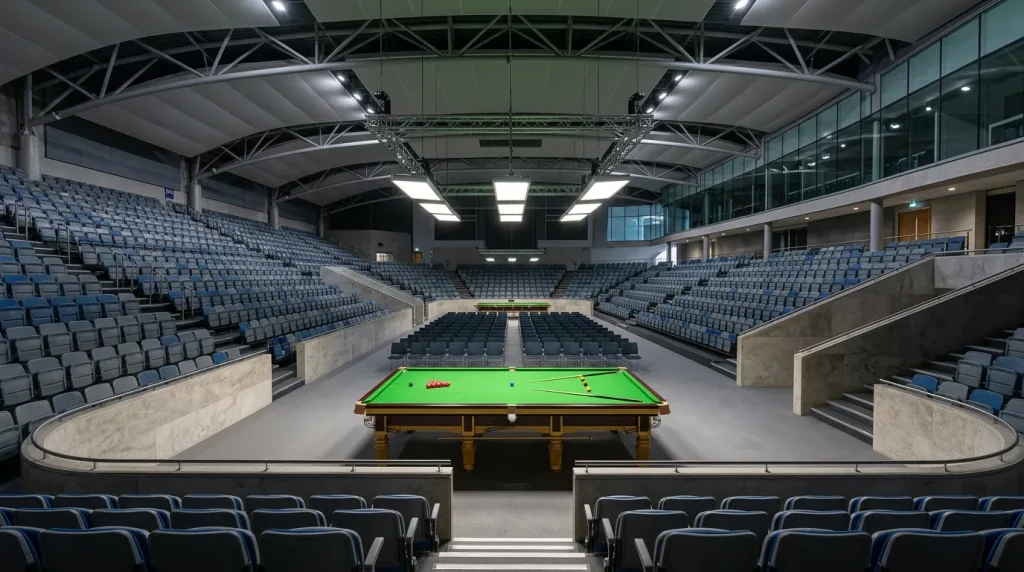
A Fourth Major Arrives on the Snooker Calendar
For decades, snooker’s landscape had three peaks: the World Championship, the Masters, and the UK Championship. Then Saudi Arabia arrived with a ten-year contract and a prize fund of £2,302,000 – making the Saudi Snooker Masters the second-richest event on the tour calendar, trailing only the World Championship’s £2,395,000. That’s not a warm-up act. That’s a genuine fourth major, and it fundamentally changes how I model outright markets and seasonal betting strategies.
WST CEO Simon Brownell framed the partnership in terms of Saudi Arabia’s Vision 2030 programme, noting that snooker provides a unique way of engaging the local population with sport. The commercial logic is clear: Saudi investment is reshaping multiple sports simultaneously, and snooker’s relatively modest price tag (compared to football or Formula 1) made it an accessible acquisition. For bettors, the interesting question isn’t why Saudi Arabia invested – it’s how a new major with unfamiliar conditions and no historical data reshapes the betting market.
Format, Field, and Prize Fund Breakdown
The Saudi Masters invites an elite field – comparable in quality to the traditional Masters at Alexandra Palace, though with a potentially expanded player list given the prize money. The format has been designed to create decisive, television-friendly matches, with shorter best-of formats in the early rounds building to longer formats in the semi-finals and final.
The £2,302,000 prize fund, with £500,000 to the winner, matches the World Championship’s winner’s cheque. That parity in winner’s prize money is significant for betting because it ensures every top player arrives with maximum motivation. At lower-prize-fund events, some established players occasionally exhibit lower intensity – a phenomenon any seasoned bettor has observed when a top-16 player loses in the first round of a minor ranking event with a £20,000 winner’s share. At the Saudi Masters, there’s no such ambiguity. The potential seasonal prize pool reaching £19 million, representing 35% growth over the previous season, confirms that events at this financial level attract peak effort from every competitor.
The ten-year commitment matters for bettors planning beyond a single season. Unlike one-off invitational events that may or may not return, the Saudi Masters will generate cumulative data – player performance records at this specific venue – that becomes increasingly valuable for modelling. By year three or four, Crucible-style venue analysis becomes possible: tracking which players thrive in the Saudi conditions and which struggle.
How a New Major Shifts Seasonal Betting Markets
Adding a fourth major to the calendar creates a ripple effect across every outright and seasonal market on tour. Before the Saudi Masters, the Triple Crown events were the only tournaments where outright prices offered significant market depth and liquidity. A fourth event at equivalent prize-fund level expands the total pool of high-value outright opportunities from three to four – a 33% increase in the number of major events available for serious outright betting.
More subtly, the Saudi Masters affects the pricing of the other three majors. Players now have four peak-motivation events to distribute their physical and mental energy across rather than three. A player who previously managed their season around three highs now has four, and the spacing of those events within the calendar creates new fatigue dynamics. If the Saudi Masters falls within six weeks of another major, some players will arrive at one or both events slightly undercooked – either from over-preparation or from managing workload. Those fatigue patterns take several seasons to become visible in the data but represent a genuine structural shift that bookmakers will need time to price accurately.
I’ve already started adjusting my seasonal outright allocation to include the Saudi Masters as a core event. Previously, I divided my outright bankroll roughly equally across the three Triple Crown events. Now I split it across four, with a slightly larger allocation to the World Championship (longest format, deepest historical data) and equal shares to the other three. This reduces my per-event exposure while maintaining total outright activity – a diversification benefit that comes for free from the expanded calendar.
There’s also a secondary market effect worth noting. The existence of a fourth major changes how players manage their schedules around it. Some will treat the Saudi Masters as a priority and adjust their preparation for surrounding events accordingly – potentially arriving underprepared at the ranking event immediately before or after. Those scheduling ripples won’t be visible to bookmakers pricing individual events, but they’re visible to anyone tracking player workload and recovery patterns across the full calendar.
Travel Fatigue and Venue Conditions as Betting Factors
The Saudi venue introduces variables that don’t exist at Sheffield, London, or York. Travel distance, time zone adjustment, climate, and cultural context all affect player performance in ways that are difficult to model but real in their impact.
European players flying to Saudi Arabia face a three-to-four-hour time difference and climate conditions that may affect sleep patterns and physical comfort, especially if the event is held during hotter months. Snooker requires fine motor precision – cue action, bridge hand stability, sighting – and even minor disruption to sleep or routine can degrade performance at the margins. Players who arrive early and acclimatise will have an edge over those who fly in at the last minute, and this adjustment window is something I’ll monitor through practice session reports and player social media in the days before the event.
Table conditions at a new venue are the great unknown. The Crucible’s tables have been studied for decades; the Saudi venue’s tables have no history. Cloth speed, cushion response, pocket dimensions – all of these will be discovered in real time during the first edition of the event. Early-round matches will provide critical data about conditions, and I plan to watch the first day’s play before placing any in-play or later-round bets. Players who adapt quickly to unfamiliar conditions – typically the more experienced, more widely-travelled professionals – will have a systematic advantage over those who need time to calibrate.
The absence of historical data at this venue is both a challenge and an opportunity. Bookmakers will price the first edition of the Saudi Masters based primarily on world ranking and recent form, because they have no venue-specific data to incorporate. If I can assess the venue conditions from early-round observations before the bookmakers adjust their later-round prices, there’s a brief window of informational advantage. That window will narrow in subsequent years as data accumulates, making the first few editions of the event the most profitable for attentive bettors.
How does the Saudi Masters prize fund compare to the World Championship?
The Saudi Masters offers £2,302,000 in total prize money with £500,000 to the winner, making it the second-richest event on the WST calendar. The World Championship"s total prize fund is £2,395,000 with an identical £500,000 winner"s cheque. The near-parity in prize money ensures both events attract peak motivation from the full elite field.
Do players typically underperform at new tournament venues?
Initial editions of events at new venues tend to produce more upsets than established tournaments. Players who adapt quickly to unfamiliar table conditions and who manage travel and climate adjustment effectively hold a systematic advantage. These venue-familiarity effects diminish after two to three editions as players and bookmakers accumulate data about the specific conditions.
Articles
Written by the editors at World Snooker Betting.
