
Snooker Betting Cash-Out Strategy: When to Take the Money
 Available in US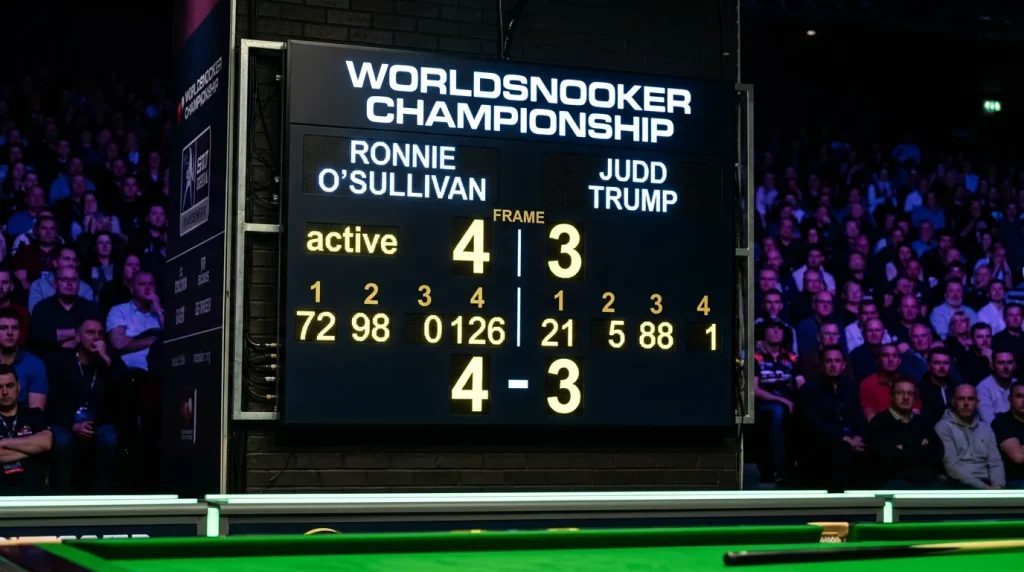
Cash Out Is a Bet, Not an Exit
The moment a bookmaker offers you a cash-out figure, they’re making you a proposition: take this guaranteed amount now, or let your bet run at the current odds. Most punters treat cash-out as a panic button – an emotional escape from uncertainty. I treat it as what it actually is: a new bet. Accepting cash-out is identical to placing a new bet against your original position at the current implied odds. Once you see it that way, the decision becomes mathematical rather than emotional.
Roughly 80% of bets are now placed on mobile devices, and every major bookmaker app puts the cash-out button front and centre during live matches. That design choice isn’t accidental – it encourages impulsive decisions. When your player drops a frame from 60 points ahead and the cash-out figure dips, the urge to hit the button before it drops further is visceral. Fighting that urge requires a framework, which is what this piece provides.
A useful reframe: every time you consider cashing out, ask yourself this – “If I didn’t already have this bet, would I place a new bet on the same outcome at the current odds?” If yes, let it run. If no, cash out. That question strips away the sunk-cost emotional attachment to your original selection and forces you to evaluate the position on its current merits.
Scenarios Where Cashing Out Makes Mathematical Sense
Not all cash-out decisions are equal. Some are clearly correct, others clearly wrong, and a frustrating number sit in a grey zone. Here are the scenarios where I consistently cash out.
New information changes the picture. Your pre-match analysis gave Player A a 65% chance based on form and head-to-head data. Two frames into the match, Player A is missing routine pots and looks physically uncomfortable – maybe an undisclosed back issue, maybe just an off day. The cash-out figure hasn’t dropped much yet because the score is still close. This is the moment to take profit or minimise loss, because your real-time assessment now diverges from your pre-match probability. The market will catch up, and when it does, your cash-out figure will crater.
The World Championship offers a specific version of this. Matches at the Crucible are split across sessions, and players can look transformed between afternoon and evening play. If your player won the first session 5-3 but looked laboured in doing so, and the cash-out figure reflects their session lead, that’s often a good exit point. Session breaks give the opponent time to regroup, and the evening session frequently produces momentum swings that erase morning leads.
Bankroll protection overrides marginal edge. If your bet has moved into significant profit and the remaining edge is slim – say, your player needs to win three more frames in a best-of-11 but is up against an opponent who’s found rhythm – cashing out a healthy profit protects capital for future bets. A bird in hand, as they say, but only when the edge has genuinely thinned. If your player is dominant and the match feels controlled, holding makes more sense even at significant paper profit.
Accumulator insurance. Multi-bets where all but one leg have landed present the clearest cash-out case. The remaining leg is a single match with all its inherent variance. If the cash-out figure on the accumulator represents a meaningful return relative to your original stake, taking it avoids the gut-punch of watching one leg destroy an otherwise successful multi-bet.
Partial Cash-Out: Splitting the Decision
Most major bookmakers now offer partial cash-out, which is the most useful development in betting technology in the last five years and still criminally underused by snooker punters.
Partial cash-out lets you take a percentage of the offered amount while leaving the rest of your bet running. If the full cash-out is £200 and you take 50%, you pocket £100 guaranteed and your remaining bet pays out at a proportionally reduced rate if it wins. This eliminates the binary tension of all-or-nothing and creates a middle path that often matches how you actually feel about a position.
I use partial cash-out most frequently during live snooker matches when the match is balanced and I have modest profit on the table. Taking 30-40% secures a return above my stake while keeping meaningful upside. If my player goes on to win, the reduced payout still feels like a result. If they lose, I’ve recovered a portion of profit that would otherwise be zero.
The timing of partial cash-out matters. In a best-of-11 match with the score at 4-3 in your player’s favour, the cash-out figure reflects a slight edge. Taking 50% at this point is sensible – you’re acknowledging that a 4-3 lead in a race to 6 is fragile. If the score moves to 5-3, the full cash-out figure jumps and you can take another partial tranche. This staggered approach – cashing out in slices as the match progresses – mimics the round-by-round hedging strategy used for tournament outrights but applies it to individual match bets.
The Hidden Margin in Cash-Out Offers
Cash-out figures are not fair-value prices. Every bookmaker builds a margin into the cash-out offer, typically between 3% and 8% below what the bet is actually worth based on current market odds. This margin is the bookmaker’s fee for providing the cash-out service, and it means that cashing out is always a slightly worse deal than placing a separate hedge bet at current market odds.
Consider a practical example. You backed Player A pre-match at 2.50 with a £50 stake. Mid-match, Player A is leading and the live odds have shortened to 1.40. The fair value of your bet is now £50 x (2.50 / 1.40) = £89.29. But the cash-out offer might be £84 or £85 – roughly 5% below fair value. That 5% is the cost of convenience.
For small stakes, the convenience is usually worth the cost. Manually hedging requires calculating the correct stake, finding the opposing market (which may have limited live liquidity), and executing the bet before odds shift – all while the match is in progress. The cash-out button does this in one tap. But for larger stakes where 5% represents a meaningful sum, placing a manual hedge on a betting exchange or with a second bookmaker is more cost-effective than using the built-in cash-out feature.
I split my approach based on stake size. Below £30 potential profit, I use the cash-out button for speed and simplicity. Above that threshold, I calculate whether a manual hedge saves enough to justify the extra effort. Over a full season of snooker betting, that discipline recovers hundreds of pounds in margin that would otherwise go to the bookmaker. For the complete framework on structuring live snooker positions, the live betting guide covers everything from in-play market mechanics to streaming delay management.
Do bookmakers charge a margin on snooker cash-out offers?
Yes. Cash-out offers are typically 3-8% below the fair value of your bet based on current live odds. The margin varies by bookmaker and by the volatility of the match. For small stakes the convenience of one-tap cash-out usually justifies the cost. For larger positions, placing a manual hedge bet at current market odds is more cost-effective.
Can you partially cash out a snooker accumulator?
Most major bookmakers offer partial cash-out on accumulators. You can take a percentage of the available cash-out amount while leaving the rest of your bet running at a proportionally reduced payout. This is particularly useful when all but one leg of an accumulator has landed, allowing you to secure partial profit while keeping some upside on the remaining leg.
Articles
Written by the editors at World Snooker Betting.
