
How Snooker Tournament Formats Affect Betting: Short vs Long Matches
 Available in US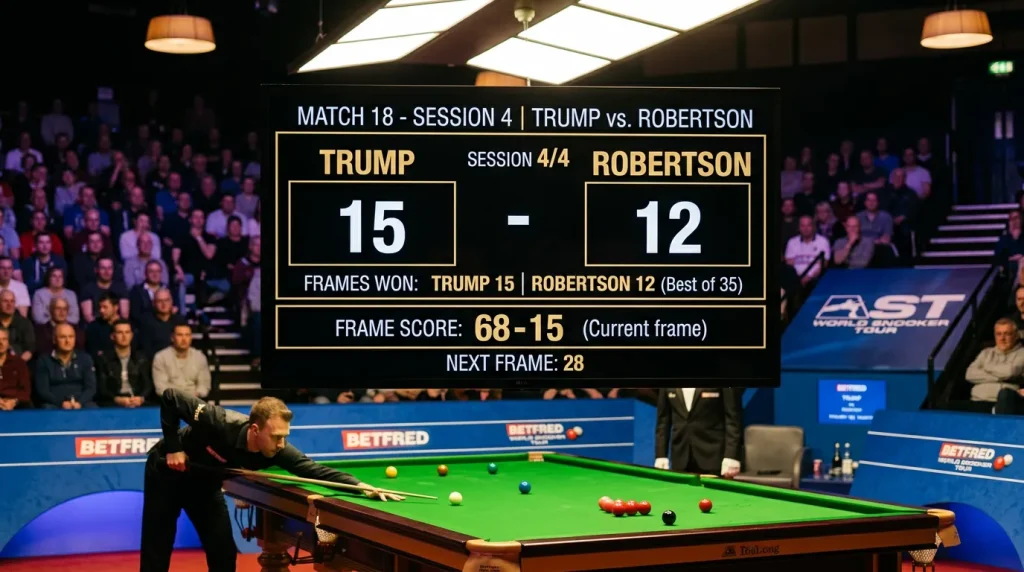
Format Is the First Variable – and Most Bettors Ignore It
I once backed the same player at the same odds on the same day – and one bet was sharp value while the other was a mistake. The difference? One match was best-of-7, the other best-of-11. Same player, same opponent quality, but the format changed the probability structure enough to flip the bet from profitable to unprofitable. That experience taught me that format isn’t a background variable in snooker betting – it’s the first filter I apply before looking at anything else.
The 2025-26 WST season features 22 tournaments with 18 ranking events, and each uses a different combination of formats across its rounds. First rounds might be best-of-7 at one event and best-of-9 at another. Later rounds stretch from best-of-11 to best-of-19 to the World Championship’s extraordinary best-of-35 final. Every format change alters the upset probability, the handicap dynamics, and the over/under frame-total expectations. Treating these formats as interchangeable is one of the most expensive errors in snooker betting.
Short-Format Events: Higher Variance, More Upsets
A best-of-7 snooker match is four frames to win. Four frames. A single break of 100 takes roughly five minutes – meaning a player can win a frame in the time it takes to boil a kettle. Stack four of those together and you have a match that can finish in under an hour if one player catches fire. That compressed timeframe amplifies variance because the sample size of frames is too small for the better player’s statistical superiority to assert itself reliably.
My dataset shows upset rates in best-of-7 first rounds consistently running 8-12 percentage points higher than in best-of-11 first rounds at comparable events. The 14 maximum breaks across the 2024-25 season illustrate the scoring explosiveness present at every level of the tour – and in a short format, one of those explosive performances can demolish a higher-ranked opponent before they’ve found their rhythm.
For betting, this means short-format events are structurally biased toward underdogs. Favourites at 1.30 in a best-of-7 are offering less value than the same favourite at 1.30 in a best-of-11, because the shorter format compresses the probability distribution. If the bookmaker hasn’t adjusted the price sufficiently for format – and many don’t, using the same pricing model regardless of match length – the underdog is systematically underpriced in short formats.
Practically, I adjust my approach at short-format events in three ways. First, I reduce stake sizes because the variance per bet is higher. Second, I favour underdog selections where I can identify form-based reasons to believe the upset probability exceeds the market’s implied figure. Third, I avoid accumulators entirely – stacking multiple high-variance short-format matches multiplies the unpredictability to a degree that makes the accumulator essentially random.
Long-Format Events: Favourites, Fitness, and Fatigue
The World Championship final is best-of-35, played across four sessions over two days. The semi-finals are best-of-33. Even the first round is best-of-19, split over two sessions. At these lengths, the better player almost always wins – not because they win every session, but because over 19 or 33 frames, their edge compounds into a decisive margin. The prize fund of £2,395,000 ensures every player takes it seriously, which further reduces the noise that casual motivation introduces at smaller events.
But long-format events introduce a variable that short formats don’t: physical and mental endurance. A best-of-19 match played across two sessions demands five to seven hours of concentrated effort. By the quarter-finals, a player might have spent 20+ hours at the table. By the semi-finals, fatigue becomes a genuine performance factor. I’ve seen top players – technically superior by any metric – lose long-format matches because they were physically spent from a draining earlier round.
The betting implication: in long-format events, I weight “path difficulty” as heavily as current form. A player who reached the quarter-final by winning 10-3 and 13-6 is in a fundamentally different physical state from one who won 10-9 and 13-12. The bookmaker might price both as equivalent quarter-finalists, but the player who scraped through has burned significantly more emotional and physical energy, and that depletion shows in pot success rates and concentration levels during the later sessions of subsequent matches.
I track cumulative frames played as a crude fatigue proxy. A player who’s played 50 frames to reach the semi-final is fresher than one who’s played 70 frames over the same number of rounds. That 20-frame difference represents roughly eight additional hours of competitive snooker – the equivalent of an extra match. At the margins, this matters enough to shift my probability estimate by 3-5 percentage points, which is the kind of edge that makes a bet worth placing.
Adjusting Handicap and Totals Bets by Format
Format changes don’t just affect match-winner markets. They fundamentally alter the dynamics of handicap and over/under frame-total betting, and the adjustments aren’t always intuitive.
Handicap lines in short formats are tighter. A typical best-of-7 handicap might be -1.5 or +1.5 frames, meaning the favourite needs to win by two clear frames for the handicap to land. In a race to four, winning by two means a 4-2 scoreline or better. That’s achievable but far from certain – a single frame going the wrong way flips the handicap. In a best-of-19 with a handicap of -3.5, the favourite needs to win by four clear frames, but they have 19 potential frames to build that margin, making the handicap proportionally easier to cover despite the larger absolute number.
Over/under frame totals are even more format-sensitive. In a best-of-7, the total ranges from 4 frames (4-0) to 7 frames (4-3). The bookmaker typically sets the line at 6.5 – over 6.5 means the match goes to a decider. For a best-of-11, the total ranges from 6 to 11, with the line usually at 9.5. The proportion of matches that go to a decider varies by format: best-of-7 matches go to 4-3 more often than best-of-11 matches go to 6-5, because the fewer frames offer the trailing player more chances to level. This means “over” bets are proportionally more likely to land in shorter formats.
My format-adjusted approach to totals: I lean toward “over” in short formats (best-of-7 and best-of-9) and toward “under” in long formats (best-of-17 and above), unless the specific matchup or conditions strongly suggest otherwise. This isn’t a blanket rule but a baseline that captures the structural tendency of shorter formats to produce closer, longer matches relative to their maximum frame count. For the detailed mechanics of how these markets work, the markets guide covers handicap and totals betting in full.
Are upsets more likely in best-of-7 or best-of-19 snooker matches?
Upsets are significantly more likely in best-of-7 matches. The smaller sample of frames amplifies variance and reduces the ability of the better player to recover from a poor start. Data shows upset rates in best-of-7 first rounds running 8-12 percentage points higher than in best-of-11 first rounds at comparable events. Best-of-19 and longer formats produce the lowest upset rates because the extended frame count allows superior quality to assert itself.
How should you adjust over/under frame totals for different formats?
In shorter formats like best-of-7, lean toward "over" bets because matches are proportionally more likely to go close to the maximum frame count. In longer formats like best-of-17 and above, lean toward "under" because dominant players have more frames to build decisive leads and close out matches before the maximum is reached. Always adjust for the specific matchup – an evenly matched pair will tend to push totals higher regardless of format.
Articles
Prepared by the World Snooker Betting editorial staff.
